
By Keri Blair
Over the years, I have grown to appreciate the quiet pause and stillness in life. The moments we often overlook—the soft rhythm of rain against a window, the sound of leaves beneath our feet, the way the sky shifts at the end of a long day.
I’ve learned to lean into these spaces, to find gratitude in the simple, steady presence of nature and what it quietly offers.
There is something about nature that mirrors the human experience—if we are willing to slow down long enough to notice it.
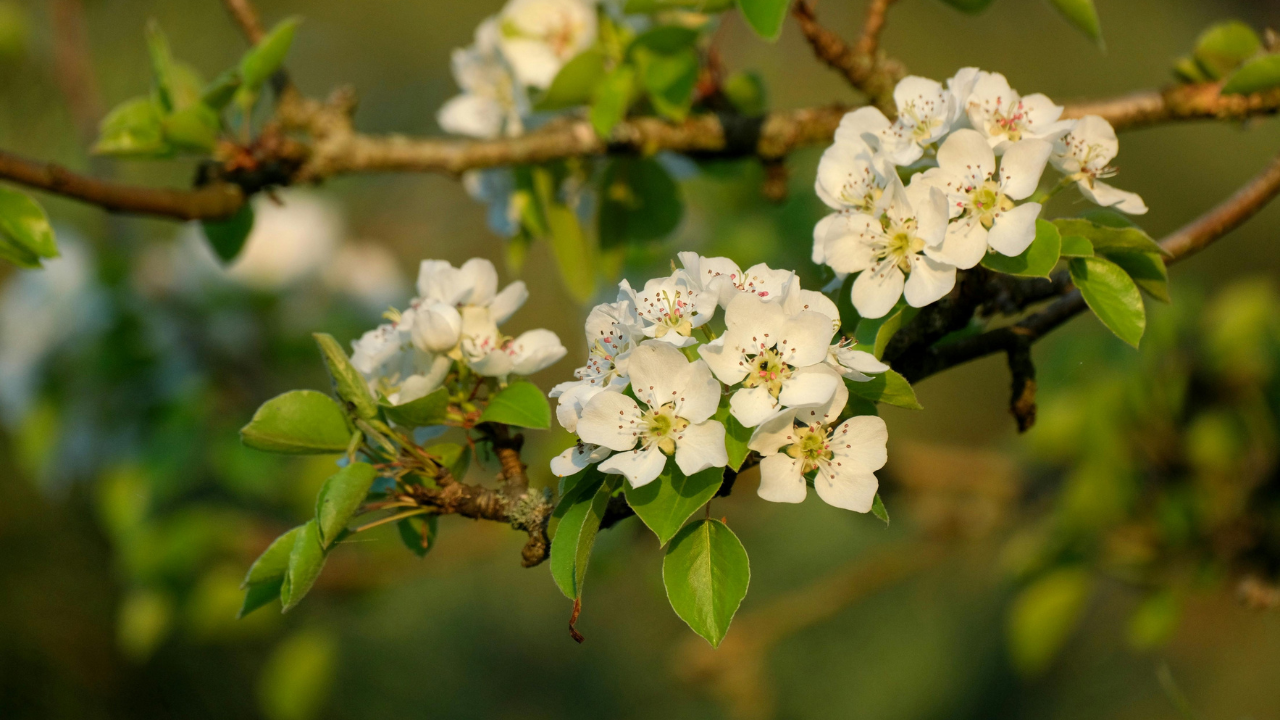
When we first moved to Tennessee, I found myself drawn to the Bradford pear trees that line the entryway to our neighborhood. Their blooms are striking—bright white, delicate, and hard to miss. Having grown up around dogwood trees in Kentucky, I naturally associated that same sense of beauty and renewal with them. To the eye, they feel similar—both stunning in their own way. But a moment of curiosity shifted my perspective.
While admiring a friend’s Bradford pear, she gently laughed and shared that her experience of the tree was very different—she could hardly tolerate the smell. To my surprise, she was right. What looks beautiful at first glance carries a scent many describe as “rotting fish,” and the blooms themselves last only 1–2 weeks.
In contrast, the dogwood’s beauty unfolds more slowly—steadier, more grounded, and longer lasting. Some even consider the Bradford pear invasive, noting its fragility and tendency to break.
It was a quiet reminder that not everything that appears beautiful at first glance is meant to endure in the same way—and that sometimes, a deeper understanding changes how we see things altogether.
What struck me even more is that the very scent that makes the Bradford pear off-putting—often described as unpleasant—actually serves a purpose. It attracts pollinators. Beneath what we experience on the surface, there is a greater process at work—one that contributes to growth, renewal, and continuation. The tree’s purpose in creation was never limited to how it looked in full bloom.
In many ways, that tension reflects the human experience.
So often, we learn how to present ourselves as composed, capable, and put together. We manage responsibilities, meet expectations, and carry full lives with strength and determination. From the outside, it can look like everything is in order. And sometimes, we may even convince those around us—and ourselves—that it is—all while quietly carrying a deeper longing to feel seen, affirmed, and fully accepted for who we are beneath it all.
And sometimes, despite our best efforts, something breaks through. We make decisions we regret. We react in ways that don’t align with who we want to be. Patterns we thought we had under control begin to surface. At times, our behaviors can even feel at odds with the faith we hold and the morals we deeply believe in. These moments can feel exposing—not only to ourselves, but within our relationships. They don’t match the image we’ve worked so relentlessly to maintain.
But what if those moments are not random? What if they’re revealing something?
One of the most overlooked parts of growth is understanding the why behind what we do. Not in a way that excuses behavior, but in a way that brings awareness. Because awareness is where meaningful change begins. Without it, we stay stuck in cycles that don’t make sense. With it, we begin to see patterns, connections, and deeper needs that may have been there all along. This is not just something I’ve come to understand professionally—it’s something I’ve lived.
There was a defining season in my own life when, by every external measure, I had reached the top of the mountain—thriving in my career, stepping into leadership, and actively serving in my church and community. From the outside, everything appeared aligned. And yet, within a very short period of time, that version of my life unraveled.
What others may have seen as poor decisions was, in reality, the surface of something much deeper—unaddressed pain, pressure, and patterns I had learned to move past rather than truly understand.
The most sobering realization wasn’t just what had happened, but that I had been disconnected from parts of my own story for far longer than I realized. That awareness changed everything.
It shifted the questions I ask—of myself and of others.
Instead of “What did you do?” it became, “What happened to you?”
Because so often, our behaviors—whether they look productive or problematic—are rooted in something deeper. When we begin to understand the why, we create space for awareness, responsibility, and meaningful change.
I think of Martha in Scripture—productive, responsible, and faithfully serving, doing what many would consider “right.” From the outside, she appeared devoted and fully engaged in meeting the needs around her. And yet, Jesus saw beyond what was visible and spoke to what was happening within her: “Martha, Martha, you are worried and upset about many things.” (Luke 10:41). I often find myself wondering what was driving her—what led her to remain so task-focused that she missed the significance of simply being present. Was it a desire for everything to be perfect? A sense of responsibility to carry it all well? Or even an internal pressure to stay busy? We don’t fully know—but it feels deeply relatable.
Jesus wasn’t responding to her performance—He was responding to her internal state.
How often do we find ourselves there? Doing all the right things, showing up in all the right ways, while quietly carrying worry, pressure, or unrest beneath the surface. It’s possible to look steady on the outside and still feel overwhelmed within. It’s possible to function at a high level and still be disconnected from what we’re actually experiencing. Even Martha, in the very presence of Jesus—serving Him, doing what many would consider a priority and meaningful—was still disconnected from what was taking place in the moment and the value of simply being.
While everyone’s story is uniquely their own, many of us develop ways—often without realizing it—to cope with what we haven’t fully processed. For some, it may look like overworking, staying busy, or striving to appear put together. For others, it may involve food, alcohol, substances, excessive exercise, or other patterns that help manage what feels overwhelming. On the surface, these behaviors can look disciplined or even admirable—but underneath, they may be attempts to avoid or numb deeper emotions and experiences.
The invitation is not to judge these patterns, but to become aware of them.
Because just like the Bradford pear—what isn’t immediately appealing can still be part of something meaningful. Beneath the surface, there is a process unfolding that we cannot fully see in the moment. And when we are willing to look deeper, even the parts of our lives that feel messy or uncomfortable can still contribute to something good.
What we often want to dismiss—the chaos, the disruption, the “stench” of certain seasons in our lives—is not wasted. In the Bradford pear, the very scent that feels unpleasant is what draws pollinators in. Bees, butterflies, and even beetles become part of a larger process—one that leads to fruit, seeds, and continued growth. What feels uncomfortable or even undesirable is often the very signal that something meaningful is happening—not in spite of it, but through it.
In much the same way, the parts of our lives that feel like missteps—our shortcomings, failures, disappointments, and even misdirected emotions—are not wasted. They can become part of a process that leads to deeper awareness, new direction, and eventual growth. This process isn’t always easy.
The exposure of truth can be uncomfortable, even painful at times. But when we are willing to stay with it—to understand rather than avoid—something begins to take root in a deeper, more lasting way.
A new awareness. A new way of responding. A new beginning.
Nothing is lost when it is brought into the light. Even the moments that feel like we no longer have control—the ones we wish we could undo or move past more quickly—can still be used to nurture something meaningful.
The next time you pass a Bradford pear in bloom, take a moment to notice both its beauty and its complexity. What is most noticeable is not always the full story. Beneath the surface, there is work taking place—quiet, unseen, and necessary for what is still to come. Even the scent that feels the most invasive is part of a process that produces life.
And in much the same way, there are seasons in our own lives that may not feel beautiful—seasons marked by discomfort, exposure, or uncertainty—yet they are not without purpose. They are often the very places where something deeper begins to form.
So, if you find yourself in one of those seasons, where things feel unsettled or unclear, gently remind yourself: there is still growth happening. Something is still taking root beneath the surface. And in time, there will be another season—one where what is being formed now begins to bloom.